Removal of Casting Gates and Risers|Precision Post-Processing for Cast Components
In modern metal casting manufacturing, gates and risers are essential auxiliary structures during molten metal filling, solidification and shrinkage compensation. Although indispensable in the casting molding process, these redundant structures are not part of the final product. Therefore, gate and riser removal becomes a necessary post-casting procedure for all qualified casting parts. Professional riser removal processing directly affects the final dimensional accuracy, surface flatness, assembly performance and overall appearance of cast aluminum parts, cast iron components and alloy casting workpieces. This article systematically introduces the process standards, technical points, processing difficulties and quality control specifications of professional casting gate and riser removal service.
1. Basic Function of Casting Gates and Risers
To help global customers understand the professionalism of post-casting processing clearly, it is necessary to clarify the function of gates and risers in casting production. A casting gate refers to the feeding channel through which molten metal flows into the mold cavity. A casting riser is a reserved material storage area designed to compensate volume shrinkage during metal solidification.
During high-temperature casting, molten metal cools unevenly and inevitably produces shrinkage cavities or porosity without riser compensation. The riser stores redundant molten metal and supplements the solidification shrinkage, effectively preventing internal defects and improving casting yield. However, after the casting is fully formed and cooled, both gates and risers become redundant bulges that must be completely removed in subsequent processing.
2. Technical Difficulties in Traditional Riser Removal
Many small factories adopt simple cutting, hammer knocking and rough grinding to remove gates and risers. This primitive processing method easily causes multiple quality risks, which are the main reasons for defective casting parts.
First, violent knocking easily produces casting crack defects, especially for brittle cast iron and aluminum alloy castings. Invisible micro-cracks will seriously reduce the structural strength and service life of mechanical parts. Second, rough cutting leaves uneven residual bosses, irregular margins and large surface errors, requiring a large amount of secondary manual polishing and correction. Third, uncontrolled force will cause local deformation, flatness deviation and dimensional inconsistency in batch casting products.
Unprofessional riser removal not only damages workpiece appearance but also affects subsequent CNC finishing, assembly tolerance and overall product qualification rate.
3. Professional Process Flow of Precision Gate & Riser Removal
Our factory adopts standardized, stable and precise riser removal procedures suitable for mass casting production, avoiding structural damage and ensuring consistent finished quality.
The complete process includes workpiece screening → reserved layer analysis → precision cutting positioning → mechanical removal → residual margin grinding → flatness correction → defect inspection.
We strictly retain a reasonable finishing allowance during removal processing, avoiding excessive cutting and insufficient cutting. After removing large gate and riser structures, we perform fine grinding on residual surfaces to eliminate burrs, sharp edges and uneven bosses, providing a high-quality base for subsequent precision machining and surface treatment such as anodizing and spraying.
4. Quality Control Standards for Batch Processing
In mass casting production, the core standard of gate and riser removal is no damage, no cracks, uniform margin and stable consistency.
Our technical team strictly inspects every batch of workpieces after processing. We focus on checking three key indicators: no visible or hidden cracks on the casting surface, flat and uniform cutting surface without residual protrusions, and qualified workpiece overall dimension tolerance. For high-strength mechanical castings that require pressure resistance and load-bearing operation, we conduct secondary flaw detection to ensure no internal structural damage caused by external force impact.
This standardized post-processing ensures that all cast workpieces maintain stable mechanical performance and assembly accuracy in subsequent precision machining and industrial application.
5. Industrial Value of Professional Post-Casting Processing
Complete and standardized gate and riser removal processing is an indispensable link in high-quality casting manufacturing. It effectively reduces subsequent processing difficulty, lowers tool wear in CNC machining, improves surface treatment quality, and stabilizes batch product consistency.
For automotive castings, hydraulic system components, automation equipment shell parts and mechanical structural castings, precise riser removal guarantees product assembly precision and long-term operational stability. Professional post-processing capability is also an important symbol of a manufacturer’s formal production system and quality control level.
Conclusion
Gate and riser removal seems to be a basic auxiliary process, but it directly determines the yield and stability of casting parts. With standardized processing procedures, precise operation standards and strict quality inspection systems, our factory provides reliable post-casting solutions for global batch casting orders. We effectively avoid common defects such as cracking, deformation and uneven residual margins, providing high-quality pre-processing foundation for subsequent CNC finishing and surface treatment. In the future, we will continue to optimize automated cutting and precision grinding processes to improve batch processing efficiency while maintaining ultra-stable product quality.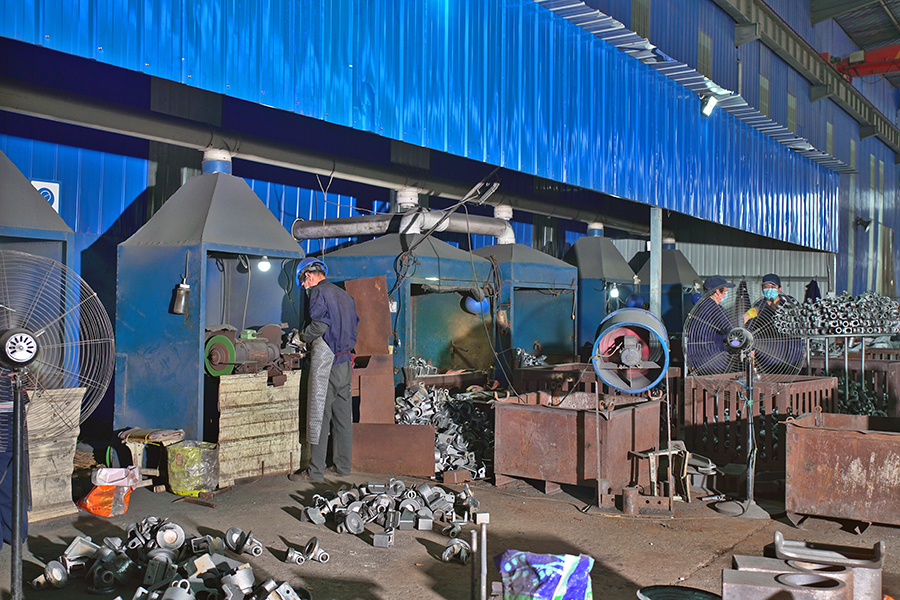
Post time: Aug-19-2026