Gear Hobbing vs Gear Grinding: Process Selection for Precision Gear Machining
In modern power transmission manufacturing, automotive gear production and mechanical transmission component processing, gear hobbing and gear grinding are the two most mainstream core processes. Many global customers are confused about process selection: which processing method is suitable for mass production, high precision requirements, high-hardness gear parts and low-cost batch manufacturing. This article professionally compares the processing principles, precision standards, surface quality, production efficiency and applicable scenarios of gear hobbing and gear grinding, helping industrial buyers and manufacturers select the most reasonable precision gear machining solution.
1. Basic Definition & Processing Principle
Gear Hobbing
Gear hobbing is an efficient rough and semi-finish gear forming process. It uses a gear hob cutter to perform continuous rolling cutting on gear blanks through meshing motion simulation. It belongs to cutting processing before heat treatment, featuring fast material removal speed and high production efficiency. It is the most common process for large-batch gear blank forming in the industry.
Gear Grinding
Gear grinding is a high-precision finish machining process after heat treatment. It uses a high-precision grinding wheel to finely trim the tooth profile and tooth surface of quenched gears. It removes tiny deformation, tool marks and tooth profile errors generated during hobbing and heat treatment, achieving ultra-high precision tooth surface quality and accurate gear meshing tolerance.
2. Precision & Surface Quality Comparison
In terms of machining precision, gear grinding has absolute advantages. After quenching treatment, gear workpieces will inevitably produce tiny thermal deformation. Ordinary gear hobbing before heat treatment cannot eliminate post-quenching deformation errors. Gear grinding can correct tooth profile deviation, tooth direction error and pitch accumulated error, stably reaching high precision grades.
In terms of surface finish, grinding processing removes tool traces completely, forming smooth and uniform tooth surface texture, greatly reducing gear meshing friction, noise and wear during equipment operation. Hobbing products retain micro-cutting tool marks, suitable for conventional transmission gears without ultra-high silent requirements.
3. Production Efficiency & Batch Production Adaptability
Gear hobbing is famous for high efficiency and low cost. It completes gear forming at one time with fast cutting speed and low single-piece processing cost, fully meeting the demand of mass gear production. For large quantities of standard gears, automobile conventional transmission gears and mechanical ordinary driving gears, hobbing is the most cost-effective process solution.
Gear grinding has relatively slow processing speed and higher processing cost, so it is not suitable for low-precision large-batch rough production. It is mainly used for secondary finishing of high-standard gears to ensure precision stability rather than simple forming processing.
4. Applicable Material & Hardness Scenarios
A core difference between the two processes lies in processing hardness adaptability. Gear hobbing belongs to mechanical cutting, which is only suitable for unquenched soft gear blanks. Once the workpiece is hardened after heat treatment, hobbing cutters cannot cut normally, and serious tool wear will occur.
Gear grinding specializes in processing hardened steel gears after heat treatment. It can precisely trim tooth profiles of high-hardness workpieces above HRC50, solving deformation and precision loss problems after quenching. It is the only standard finishing process for high-strength, high-wear-resistant precision gears.
5. Industrial Process Selection Standards for Buyers
We summarize the most practical selection rules for global industrial customers:
• For ordinary standard gears, large-batch conventional transmission parts and cost-sensitive orders: choose gear hobbing process
• For high-precision silent gears, high-speed transmission gears, hardened steel gears and equipment core power parts: choose gear grinding finishing process
• For high-end gear products: adopt composite technology of “hobbing forming + heat treatment + grinding finishing” to balance efficiency, cost and precision
Conclusion
Both gear hobbing and gear grinding are indispensable core processes in modern precision gear machining. Hobbing undertakes high-efficiency batch forming production, while grinding guarantees ultra-high precision and post-hardening correction. Our workshop is equipped with complete gear hobbing machines and gear grinding equipment, supporting full-process customized gear processing from blank forming, heat treatment to precision finishing. We provide customers with targeted process scheme selection according to gear usage scenarios, precision requirements and batch volume, ensuring qualified gear precision, stable meshing performance and reliable product service life.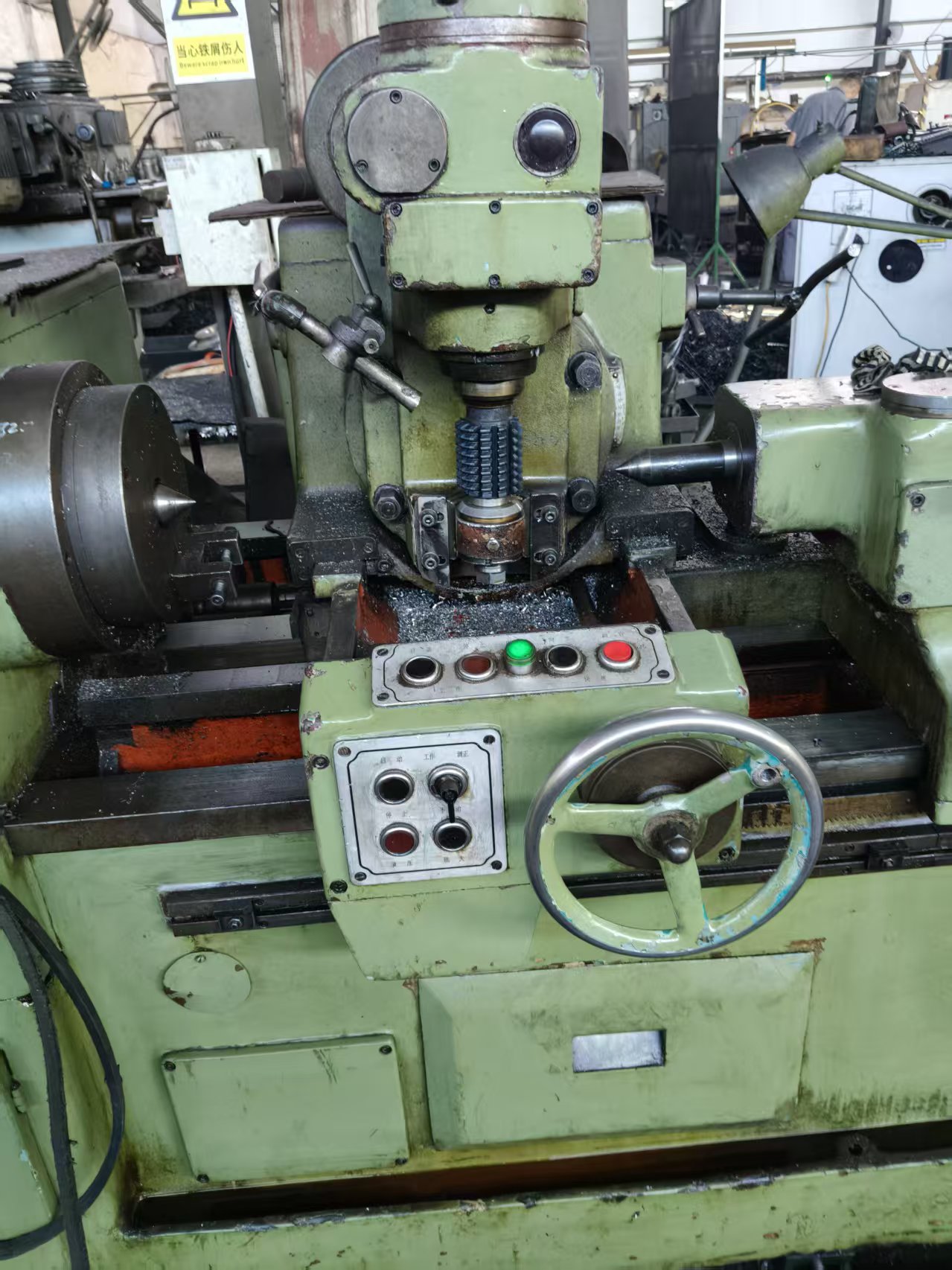
Post time: Aug-19-2026